Studio note · Printing
What is a Fine Art (Giclée) Print
Key takeaways
- What giclée actually means
- How it differs from a regular lab print
- What the printing process involves
- Understanding inks and archival papers
A bit of history
“Giclée” has French roots — the word was coined by Jack Duganne in the 1990s to describe high quality inkjet prints made by spraying ink onto paper. He wanted a term that separated such prints from the commercial Iris proofs of the time; it derives from gicleur, the French word for a jet or nozzle.
Put simply, fine art and giclée are used interchangeably for high quality prints — those produced with two components that make them last: archival pigment inks in an inkjet printer, and archival papers.
But what is “quality”?
I judge the quality of a print on two things:
- Does the image hold true to the scene — in detail and sharpness, in tonal range between dark and light, and in colour?
- How long will it last without visible ageing or colour loss?
The first you can judge yourself, since it is your image. To qualify a source, look at cost variance — archival fine art prints are expensive — and talk to your print shop about their archival process. If they can discuss inks and papers tailored to your specific image, that is a good sign: they are invested in the best possible result.
Inks and papers
A print is made when ink is deposited on a paper surface. For that output to last:
Archival inks. Inkjet inks are either dye based or pigment based. Both work, but the printing community generally gives pigment inks the edge: dye inks are water soluble and damage easily with water, and they are slightly less fade resistant over time.
Archival paper. The paper is what qualifies a print as archival. It should be acid free — acid is a key reason prints deteriorate and brown over time — and OBA free, since optical brightening agents added to make paper look whiter break down gradually and lead to fading.
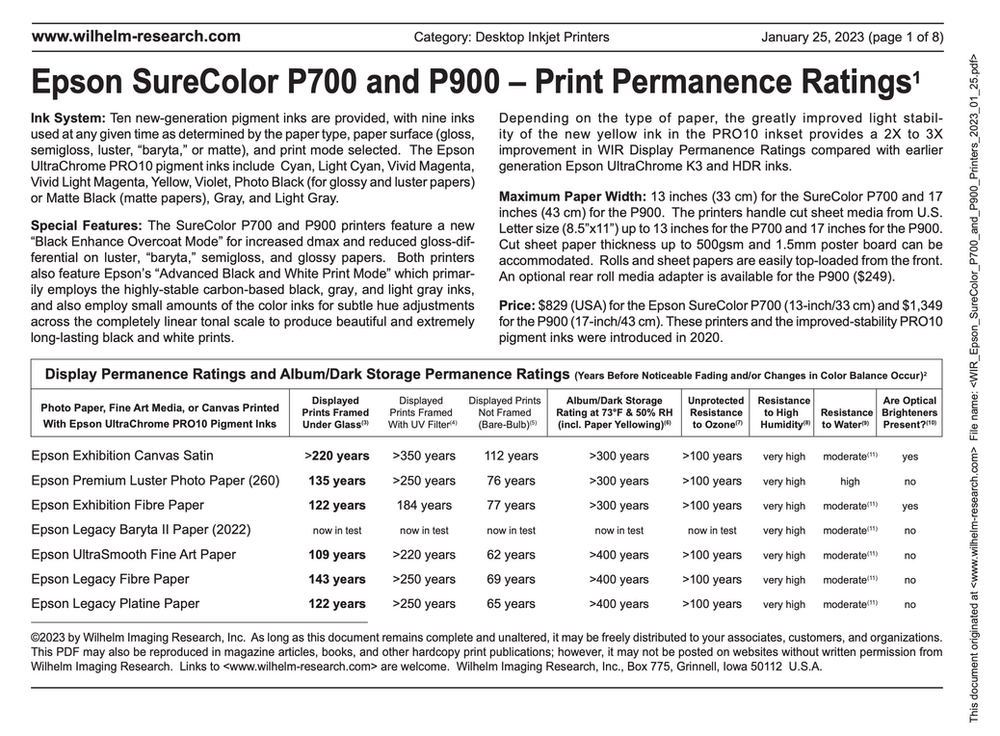
In summary, archival prints last because pigment inks on acid-free paper offer the highest longevity. Wilhelm Research test and publish permanence reports for different ink and paper combinations. Next time you speak to a print shop, ask which printer and which paper they use — that, plus resources like the above, will tell you how archival your print really is.